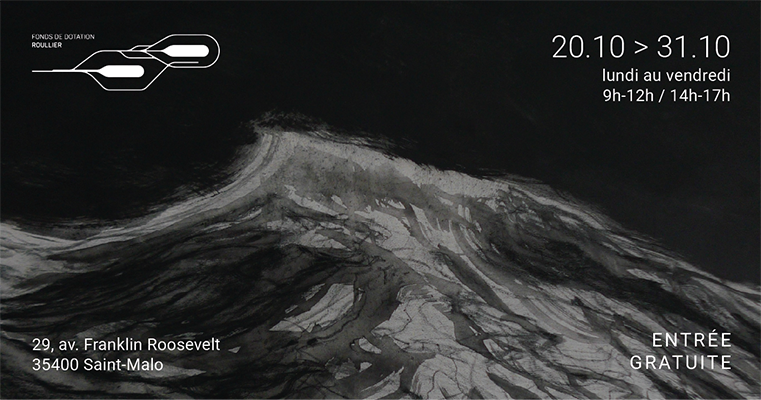
“Primitive Sea” is a temporary exhibition at the Roullier Endowment Fund
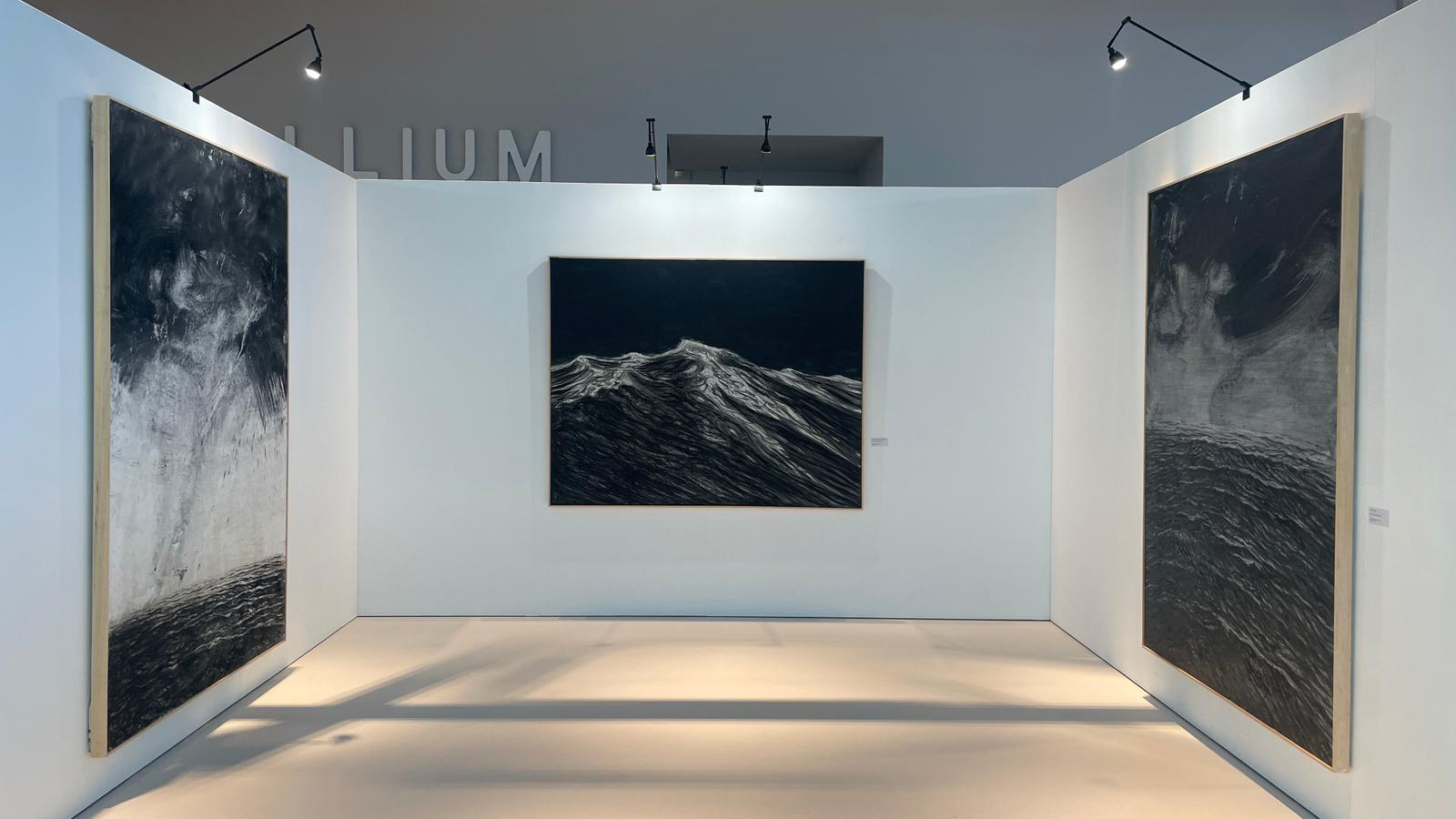
Following the summer 2025 exhibition “L’eau qui nous lie,” which already featured three works by Franco Salas Borquez, the Franco-Chilean artist is once again exhibiting at the Fonds de Dotation Roullier with fifteen new works, some of which have never been shown to the public.
For this new exhibition, titled “Mer primitive,” the artist immerses us in his favorite element—the sea—through a wide variety of techniques: oil on canvas, graphite, oil pastel, graphite pencil, ink, pigments…
Franco Salas Borquez discusses this new exhibition:
“This exhibition was inspired by an image: that of a primitive man discovering the sea for the first time. Awed and frightened by its power, he would return day after day to his shelter to sketch that unique moment with pieces of charcoal; and every day, as he returned to gaze at the ocean, he found a bridge there—a bridge that led him just as much toward his deepest, most primal fears as toward his greatest challenges.”
An exhibition open to the public from October 20 to 31, 2025
The exhibition “Primitive Sea,” on display in the lobby of the Roullier Endowment Fund, will be open to the public Monday through Friday from 9 a.m. to 12 p.m. and from 2 p.m. to 5 p.m. during the All Saints’ Day school break, from October 20 to 31, 2025.
Guided tours of the exhibition these sessions will also be offered on Wednesdays, November 5, 12, 19, and 26, from 2:30 p.m. to 3:30 p.m., by registration.
Practical Information :
- Free guided tours
- By registration only
- Duration: approximately 1 hour
- Maximum of 20 participants per tour
- Accessible to people with limited mobility

Franco Salas Borquez
Franco Salas Borquez is a Franco-Chilean painter, born in 1979 on the island of Chiloé, off the coast of Chile. Coming from a family of seafarers—his father was a fisherman—he maintains a close connection to the sea, which over time has become the sole subject of his works, as he views the depiction of the sea as a constant challenge.
In his ongoing artistic exploration of how to depict the sea, he experiments with various painting techniques—marble dust, pencil, oil on canvas, graphite, pastels, ink, and graphite pencil—always in the service of this element. His canvases take shape through an intuitive yet rigorous process in which his brushstrokes become as fluid as the subject depicted on the canvas.
The Endowment Fund is hosting fifteen of his large-format works through the end of November, providing a showcase in the building’s lobby for his pieces, which appear both powerful and fragile, yet full of subtlety.