A temporary exhibition on the theme of seaweed
Since January 15, 2026, the Roullier Endowment Fund has been hosting a temporary exhibition in the building’s lobby dedicated to algae and their properties, titled “When Algae Touch Us.”
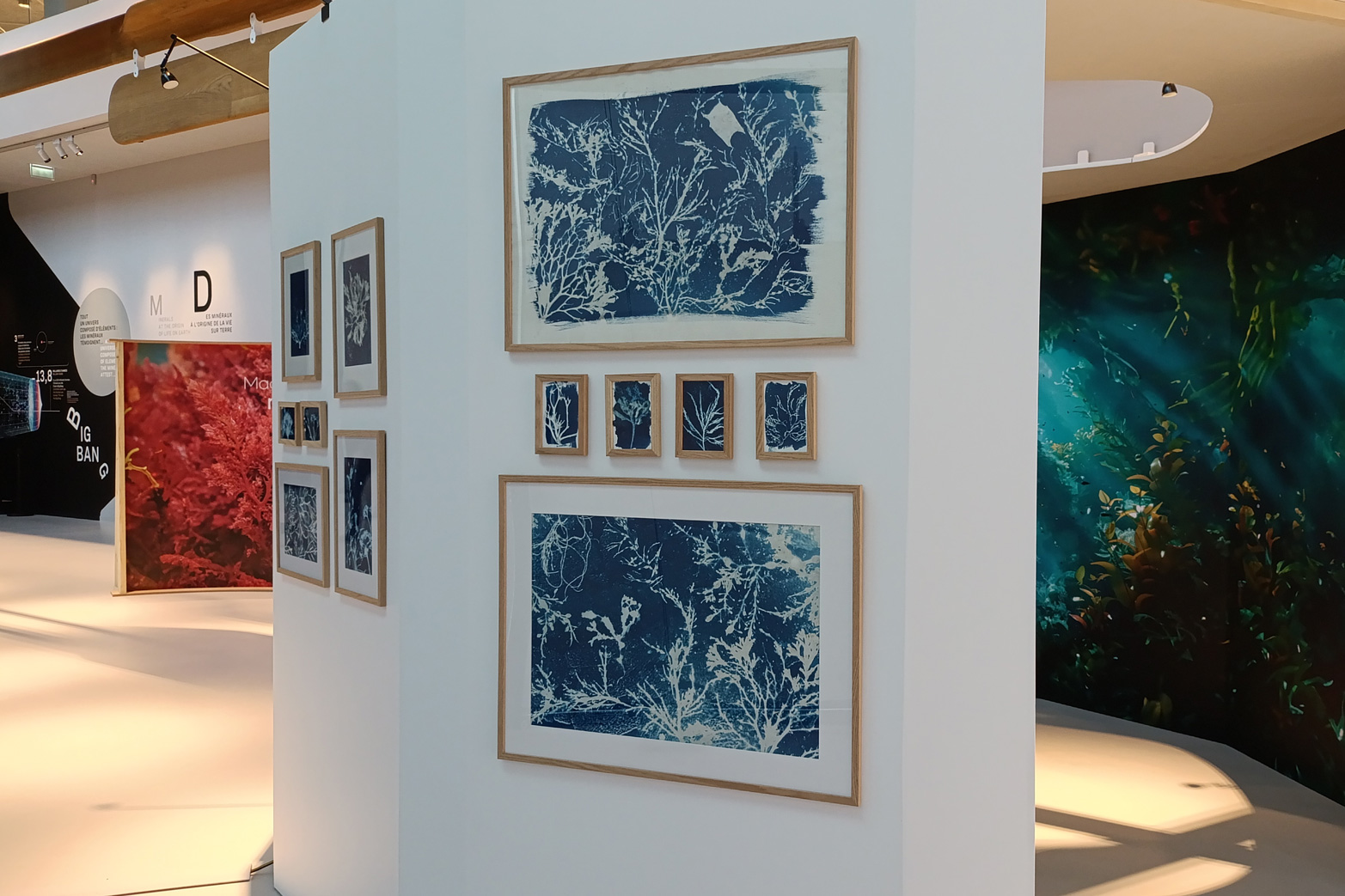
Organized around four informational panels and a central immersive structure, this exhibition highlights algae and their crucial importance in the fields of animal and human nutrition, for terrestrial and marine ecosystems, as well as the potential they offer in various industrial sectors that impact our daily lives.
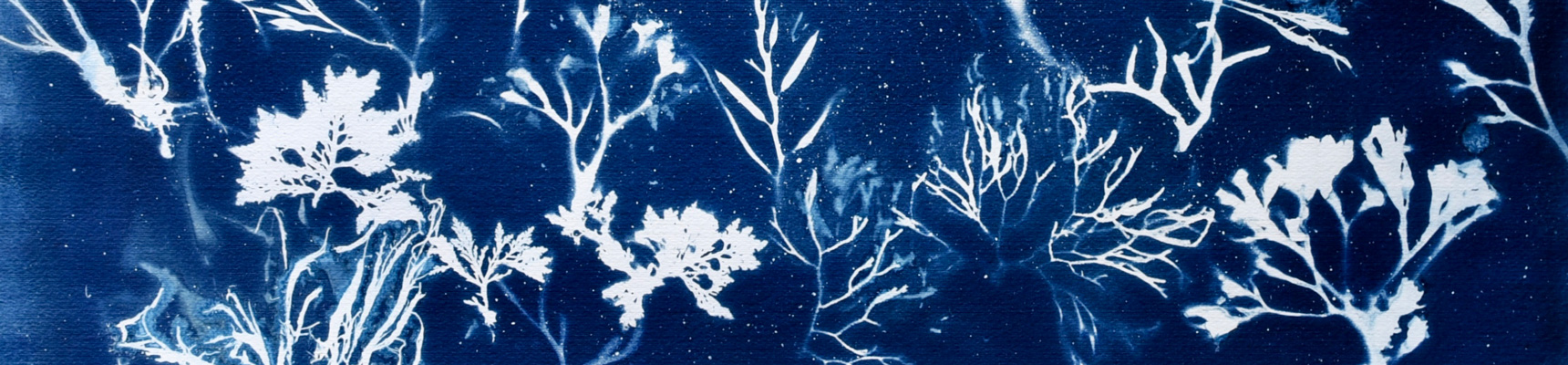
Two artists from Saint-Malo are also presenting their works around the exhibition’s central structure: cyanotypes created using algae.
Visit the exhibition
The exhibition “When Algae Touch Us” will be open to the public for self-guided tours Monday through Friday from 10 a.m. to 12 p.m. and from 2 p.m. to 4 p.m.:
- During the winter school break, from February 16 to 27, 2026
- During the Easter school break, from April 13 to 24, 2026
- During the summer school break, from July 6 to August 28, 2026.
Guided tours of the exhibition are also offered from time to time (45 minutes), by registration.

Of crucial importance to ecosystems and living organisms
The 72,500 different species of algae identified on Earth today play a vital role in the balance of marine and terrestrial life. As the foundation of the ocean food chain, they provide habitat for fish and crustaceans, filter water, stabilize sediments, and store carbon on the ocean floor.
Through photosynthesis, algae also account for nearly 50% of global oxygen production.
From microscopic algae to today’s vast kelp forests, algae have shaped the Earth and continue to stabilize the climate. They remind us how inextricably linked the health of the ocean is to that of our atmosphere.
Seaweed in everyday life
In many industries, algae represent a raw material with significant potential. Polysaccharides extracted from certain algae can be used to produce polymers that serve as alternatives to petroleum-based plastics. Biofuels derived from microalgae are also being studied, while other researchers and manufacturers are exploring the potential of algae in the textile and construction sectors.
Certain species of algae are already commonly used in human food as gelling agents (such as agar-agar, extracted from a red algae) or in cosmetics. They are also playing an increasingly important role in animal feed, whether for marine animals (farmed fish, crustaceans, or mollusks) or land animals.
As a local and renewable resource, seaweed thus serves as a living bridge between sea and land, capable of sustainably nourishing ecosystems… and enriching our plates.
